
A new AC sound can be easy to ignore for a day or two, especially when the system is still cooling. But noisy air conditioner repair is often less costly when the issue is found early. A rattle may be a loose panel. A screech can point to a failing motor component. The difference matters because one can be a small adjustment while the other can lead to a system shutdown.
For homeowners, property managers, and business owners, the useful question is not simply, “Is my air conditioner loud?” It is: What type of sound is it, when does it happen, and has the system’s performance changed along with it? Those details help a qualified HVAC technician diagnose the problem accurately instead of guessing.
What Your Air Conditioner Sound May Be Telling You
Air conditioners make some normal operating noise. You may hear a low fan hum, the outdoor condenser starting, or a brief click as the thermostat calls for cooling. What deserves attention is a sound that is new, unusually loud, repetitive, or paired with weak airflow, warm air, short cycling, water around the equipment, or a higher electric bill.
A buzzing sound can have several causes. Sometimes it comes from a loose electrical connection, a worn contactor, a vibrating cabinet panel, or debris around the outdoor unit. Because electrical components are involved, this is not a sound to investigate by opening equipment panels. A technician should inspect the wiring, controls, and moving parts safely.
Rattling is common and can be relatively straightforward, but it still needs a proper look. The source may be a loose screw, cabinet panel, fan guard, refrigerant line, or mounting hardware. On a rooftop package unit, vibration from normal operation can gradually loosen hardware and create a louder rattle. Left alone, that movement can wear on nearby components.
Squealing or screeching usually calls for quicker service. It can indicate a motor bearing problem, a failing blower motor, or an issue with a belt on equipment that uses one. Not every system has belts, and the repair depends on the equipment design. What matters is that a high-pitched mechanical sound rarely improves with continued use.
Grinding or metal-on-metal noise is more serious. It may mean a motor bearing has worn down or a fan assembly is out of alignment. Continuing to run the system can put added strain on the motor and may turn a targeted repair into a larger replacement.
Banging, clanking, or thumping can occur when a fan blade is loose, damaged, or striking another part of the unit. It can also happen when a component inside the compressor is failing. Since outdoor fan and compressor issues affect cooling capacity and system reliability, prompt diagnosis is the practical choice.
Hissing deserves attention as well. A brief soft hiss at shutdown may be normal pressure equalization. A persistent hiss, however, can be associated with a refrigerant leak or airflow issue. Refrigerant work requires licensed handling and a complete repair process, including leak detection and system testing. Adding refrigerant without correcting the leak is not a real solution.
When Noisy Air Conditioner Repair Should Not Wait
Noise alone does not always tell the full story. The timing and the accompanying symptoms help determine urgency. If the sound is loud enough to be heard clearly indoors, begins suddenly, or changes as the system runs, it is wise to schedule service soon.
Turn the cooling system off and arrange professional service if you notice burning odors, repeated breaker trips, smoke, grinding, severe banging, or a fan that is not spinning normally. These signs can involve electrical or mechanical failure, and running the equipment further may cause more damage.
Commercial settings have an added layer of concern. A noisy rooftop unit may affect employee comfort, customer experience, and daily operations. For restaurants and food-service businesses, unusual sounds from ventilation equipment or refrigeration-related mechanical components can also signal airflow or motor issues that should be addressed before they interrupt service.
There is a trade-off in every repair decision. A minor vibration may not require an extensive repair, while a failing motor or compressor component may require a closer conversation about cost, equipment age, efficiency, and expected service life. Honest recommendations should explain both the immediate repair and the longer-term picture without pushing replacement when a repair makes sense.
What a Technician Checks During an AC Noise Diagnosis
A good diagnosis starts by listening. Technicians will often ask whether the sound occurs at startup, during the cooling cycle, at shutdown, or continuously. They will also want to know whether the system still cools evenly and whether the sound comes from the indoor equipment, outdoor condenser, rooftop unit, or another part of the HVAC system.
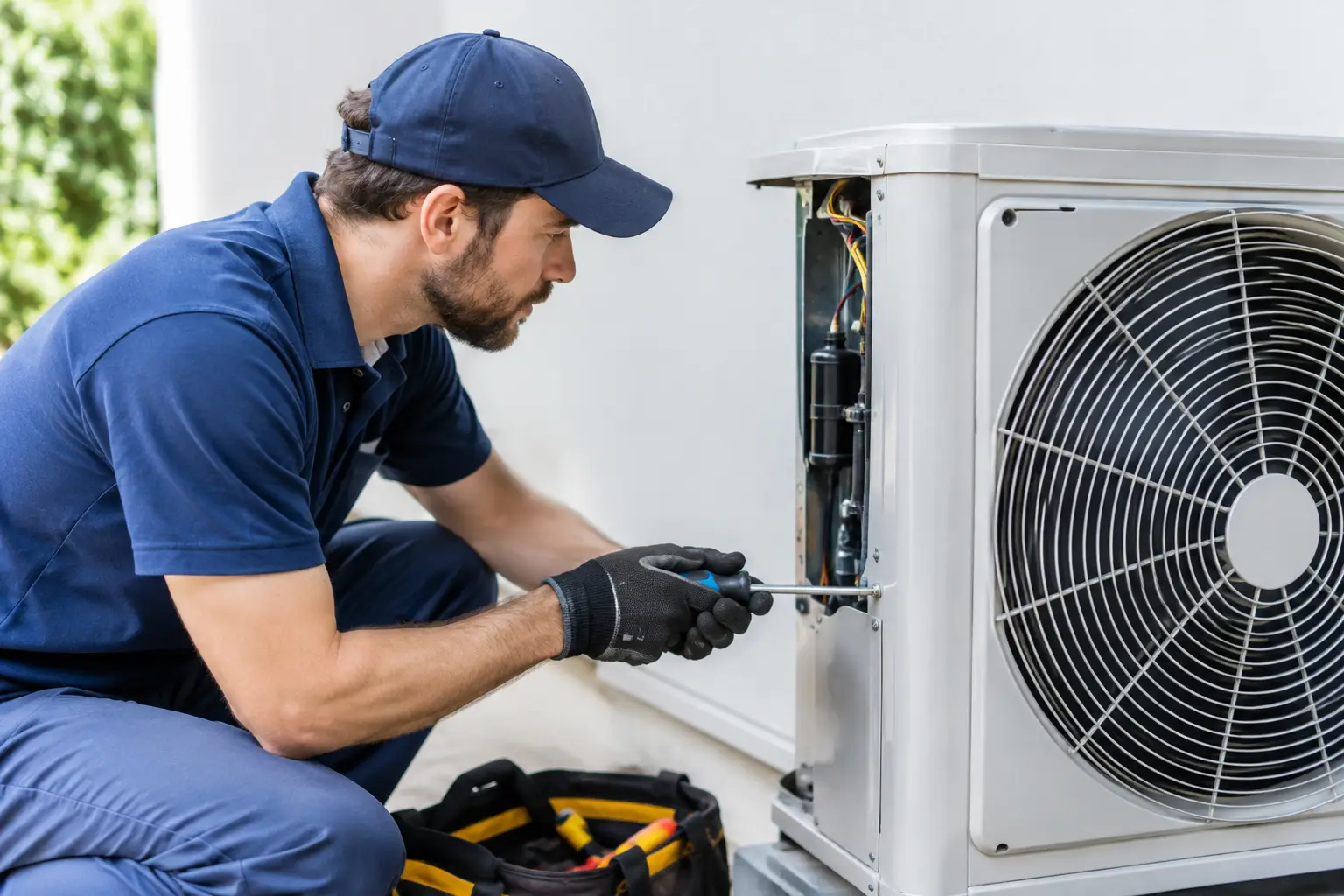
From there, the inspection may include the blower assembly, indoor and outdoor fan motors, electrical controls, mounting hardware, cabinet panels, refrigerant lines, condensate components, and overall airflow. On belt-driven commercial equipment, belt condition, pulley alignment, and tension may be part of the check. On larger systems, vibration can travel through panels and supports, so the apparent source of the sound is not always the actual source.
The goal is to identify the failed or loose component, confirm why it failed, and make sure the repair addresses the cause. For example, replacing a worn motor without checking airflow, electrical performance, and fan operation may miss the condition that shortened the motor’s life in the first place.
Why Delaying a Noise Problem Can Cost More
Air conditioning equipment is a group of connected parts. When one moving component begins to wear, it can create vibration, heat, or electrical strain elsewhere in the system. A loose fan can damage the blade or motor. A worn bearing can overwork the motor. A refrigerant leak can reduce cooling and place additional stress on the compressor.
That does not mean every noise leads to a major failure. It means early inspection gives you more choices. A small repair can sometimes prevent downtime during a hot Southern California week, when a struggling system is already working its hardest.
Preventive maintenance also helps catch developing noises before they become disruptive. During routine service, a technician can check fasteners, motors, electrical connections, airflow, and operating performance. For property managers and businesses with multiple systems, documenting recurring sounds and repairs can be especially useful when planning maintenance or equipment replacement.
Clear Answers Before You Approve a Repair
When your AC is making noise, you deserve an explanation that makes sense. Before approving work, ask what component is causing the sound, whether the system can safely operate until the repair is made, what happens if the issue is delayed, and whether the repair is likely to restore reliable operation.
A dependable HVAC contractor should also be direct about uncertainty. Some sounds require testing under load before the cause is confirmed. Others may reveal additional wear once the equipment is opened for service. That is normal, but the findings and options should be explained clearly before additional work moves forward.
Honest Heating & Air Conditioning serves homes and businesses throughout Burbank, the San Fernando Valley, Los Angeles, and nearby communities with straightforward diagnostics and clean, thorough repairs. Whether the issue is a loose component, a failing motor, an airflow concern, or a more significant system problem, a timely evaluation can replace uncertainty with a practical next step.
A strange AC sound is your equipment asking for attention. Listening early gives you the best chance to protect comfort, avoid disruption, and make a repair decision with clear information rather than pressure.