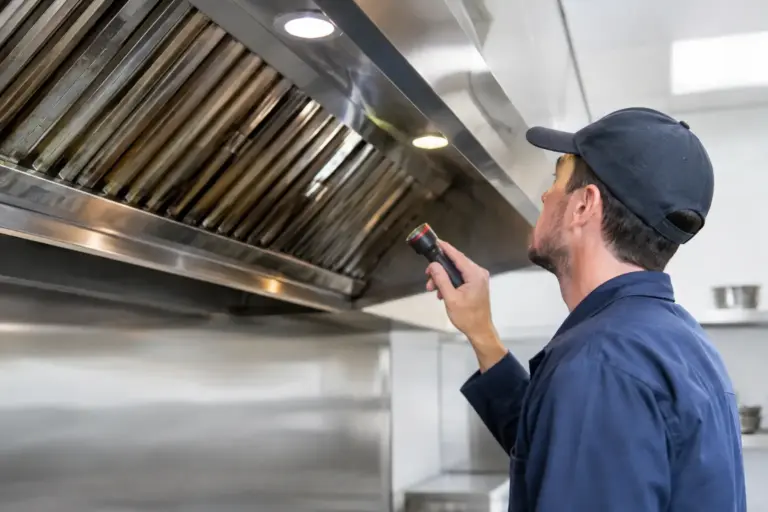

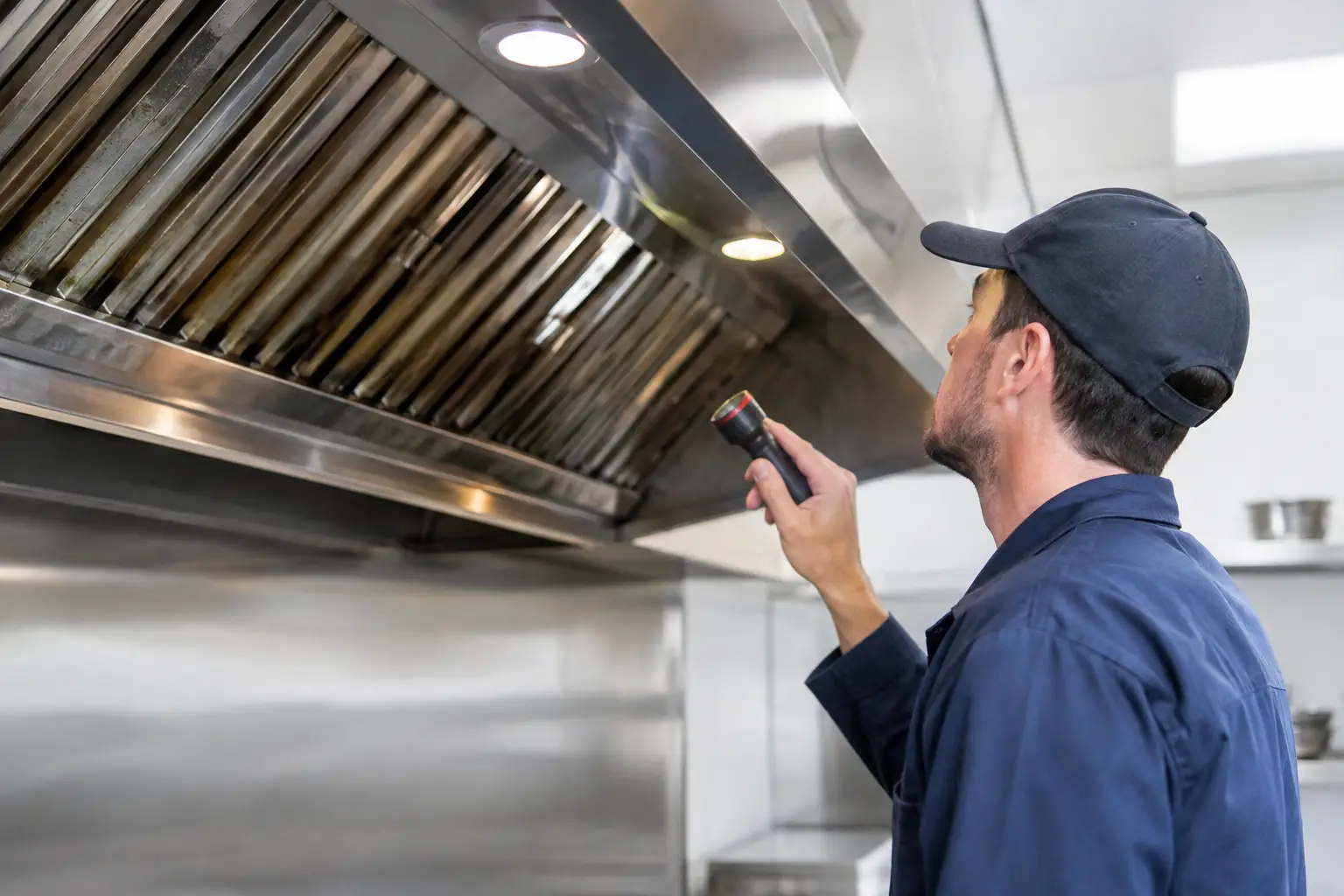
A kitchen can look busy and productive right up until smoke hangs over the cook line, grease odors reach the dining room, or the hood stops pulling heat away. Restaurant hood exhaust fan repair addresses the equipment behind that problem: the fan, motor, belts, controls, and airflow path that keep a commercial kitchen safer and more workable during service.
A hood system is not just another piece of mechanical equipment. It supports employee comfort, helps control grease-laden vapors, and allows the kitchen to operate as intended. When its exhaust fan starts struggling, waiting for a complete failure can turn a manageable repair into lost prep time, an interrupted shift, or a larger equipment expense.
What a Hood Exhaust Fan Does for Your Kitchen
The exhaust fan creates the pull that moves heat, smoke, steam, and cooking vapors from beneath the hood to the exterior of the building. Depending on the system, that fan may sit on the roof or be installed inline with the ductwork. Make-up air equipment may also work alongside the exhaust system to replace the air leaving the kitchen.
For the hood to perform correctly, the fan needs adequate speed, proper belt tension when applicable, a sound motor, working controls, and a clear path for airflow. One weak component can affect the whole system. A fan that turns but runs too slowly, for example, may leave the hood unable to capture smoke effectively during a rush.
This is why the right service call starts with diagnosis rather than assumptions. The visible symptom might be smoke near the grill, but the actual cause could be a worn belt, failing motor bearings, a control issue, electrical trouble, or restricted airflow. A technician should identify the source before recommending a repair or replacement.
Signs You May Need Restaurant Hood Exhaust Fan Repair
A loud hood fan is one of the most common signs of trouble. Squealing often points to a slipping or worn belt. Grinding, scraping, or rumbling can indicate worn bearings, an imbalanced fan wheel, or a motor issue. Noise alone does not always mean immediate replacement, but it should not be ignored. Mechanical problems tend to get worse under the long operating hours of a restaurant kitchen.
Reduced smoke capture is another clear warning. If smoke escapes the hood during normal cooking, employees may first notice heat building around the line, lingering odors, or greasy residue appearing faster than usual. A hood can appear to be on while moving far less air than it should.
Other concerns include a fan that starts and stops unpredictably, a motor that trips a breaker, vibration at the roof-mounted fan, or an exhaust system that does not come on when the cooking equipment is in use. If the fan will not start at all, the problem may be mechanical, electrical, or related to the control circuit. Each possibility calls for a careful inspection rather than a quick guess.
Do Not Treat Odors as a Minor Issue
Kitchen odors are part of food service, but a sudden change in how long those odors remain can signal an airflow problem. When exhaust performance drops, grease vapors and heat may stay in the kitchen longer than expected. That can make working conditions harder on the staff and point to a system that needs attention before it stops altogether.
Common Repairs and When Replacement Makes More Sense
Many hood exhaust fan problems are repairable. Belts wear out, pulleys can become misaligned, motors can develop bearing trouble, and controls may fail. These are real operating components, not cosmetic details, and resolving them promptly can restore performance without replacing the entire fan assembly.
Motor repair versus replacement depends on the motor condition, availability of parts, age of the equipment, and the cost of downtime. Replacing a belt may be straightforward if the fan and motor are otherwise in good condition. Replacing a motor may be a practical choice when the fan housing, wheel, electrical connections, and controls remain sound.
Full fan replacement may be the better recommendation when corrosion has compromised the housing, repeated repairs have not solved ongoing reliability issues, the fan wheel is damaged, or the equipment is no longer capable of meeting the kitchen’s operating needs. The lowest initial price is not always the lowest operational cost. A repair that gets a kitchen through a short-term need may still be the right choice, but the operator deserves a clear explanation of its expected service life and limitations.
At Honest Heating & Air Conditioning, the approach is straightforward: inspect the system, explain what is causing the problem, and provide practical options without pressure. Restaurant owners and facility managers need information they can use, especially when a ventilation issue affects the day’s service.
Why Airflow Testing Matters After the Repair
Replacing a failed part is only one part of the job. A hood exhaust fan should be checked under operating conditions to confirm that it starts correctly, runs without abnormal vibration, and restores proper airflow at the hood. If the system includes variable controls, interlocks, or make-up air equipment, those components may also need to be evaluated.
This matters because airflow problems can be layered. A new belt will not solve a control problem. A working motor will not correct a blocked or poorly performing airflow path. Likewise, increasing fan speed without checking the rest of the system can create its own issues, including excess noise or an uncomfortable pressure imbalance in the kitchen.
A thorough service visit looks beyond the first failed part. It checks the condition of the motor, fan wheel, bearings, pulleys, belts, mounting, electrical connections, and controls as appropriate. That level of troubleshooting helps prevent repeat calls for the same underlying problem.
Maintenance That Helps Avoid Mid-Service Failures
Restaurant hood exhaust systems work hard, often during the hottest and busiest parts of the day. Routine attention is the practical way to catch wear before it becomes a shutdown. Maintenance does not eliminate every failure, but it can reveal issues such as belt wear, vibration, loose hardware, motor noise, or declining airflow early enough to plan a repair.
For operators, the most useful habit is noticing changes. Train managers and kitchen staff to report unusual fan noise, slower smoke capture, vibration, odors that linger, or controls that behave inconsistently. Those observations give a technician valuable context and can help narrow the diagnosis.
Keep in mind that kitchen hood cleaning and mechanical service are related but separate needs. A clean system still needs properly operating fan components and controls. Likewise, a repaired motor does not replace the need to maintain the grease-management requirements for the overall exhaust system. Coordinating both protects performance and helps avoid preventable problems.
Plan Service Around Your Operating Schedule
Restaurants cannot always pause cooking during peak hours. When possible, schedule inspections or non-urgent repairs around prep periods, closed days, or lower-volume times. For a failed or unsafe system, prompt professional evaluation is the better move. Continuing to operate with poor exhaust can make the kitchen hotter, less comfortable, and more difficult to manage.
A local commercial technician familiar with kitchen ventilation can also help distinguish between a targeted repair and a larger equipment decision. That is especially valuable for multi-unit operators and property managers who need clear documentation, dependable follow-through, and minimal disruption to tenants or staff.
What to Share When You Call for Service
A few details can make the service visit more efficient. Explain whether the fan runs, what sounds it makes, when the issue began, and whether smoke capture has changed. Let the technician know if a breaker has tripped, if the controls are unresponsive, or if the issue occurs only during certain cooking periods.
If the unit is roof-mounted, safe access and building coordination may also affect the visit. For restaurants in Burbank, the San Fernando Valley, Los Angeles, and nearby communities, working with a qualified commercial HVAC and ventilation team helps keep that process organized and focused on the actual problem.
A hood fan does its best work quietly in the background. If smoke, heat, noise, or unreliable operation brings it to everyone’s attention, a clear diagnosis and timely repair can help your kitchen get back to serving customers with fewer distractions.